Enable ordering on one to many relationships in class Query #84
Conversation


- Add a new class QueryWarning as base for QueryNullableOrderWarning
  and QueryOneToManyOrderWarning
relationship in ORDER BY. Ref. #83.


|
@MRichards99: please have a look (strange enough: I can't request you for reviewer). |

|
I'll look at this tomorrow and test that it works for DataGateway |
|
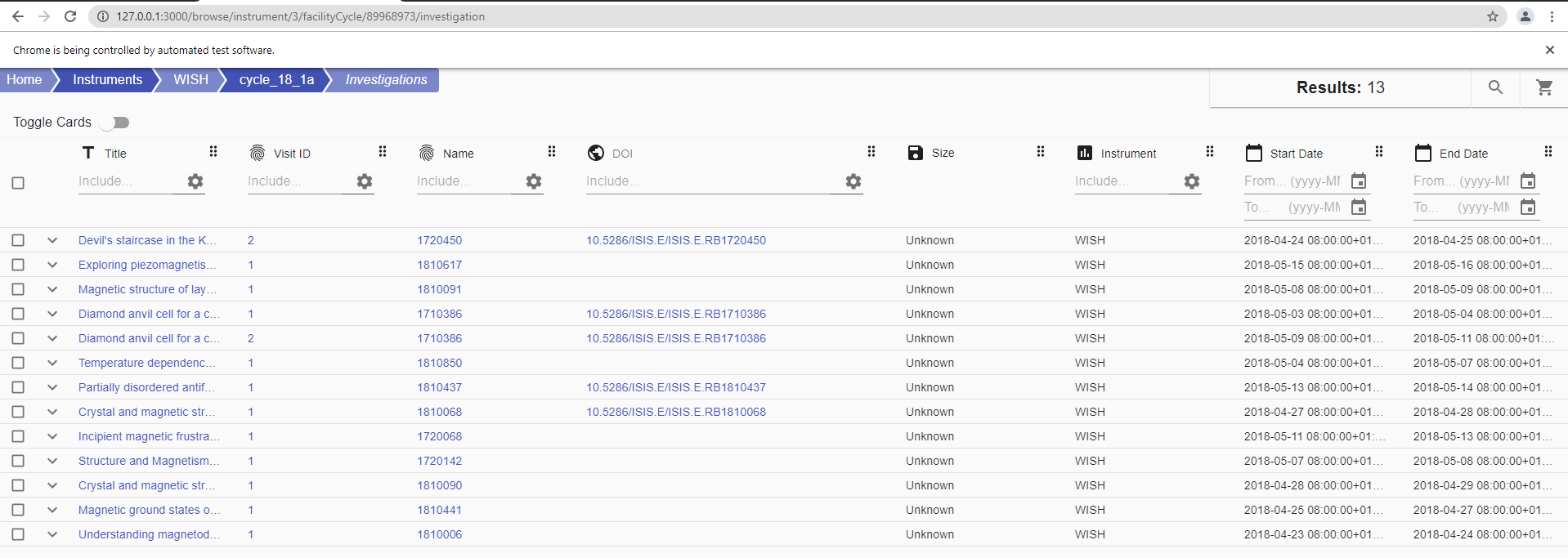
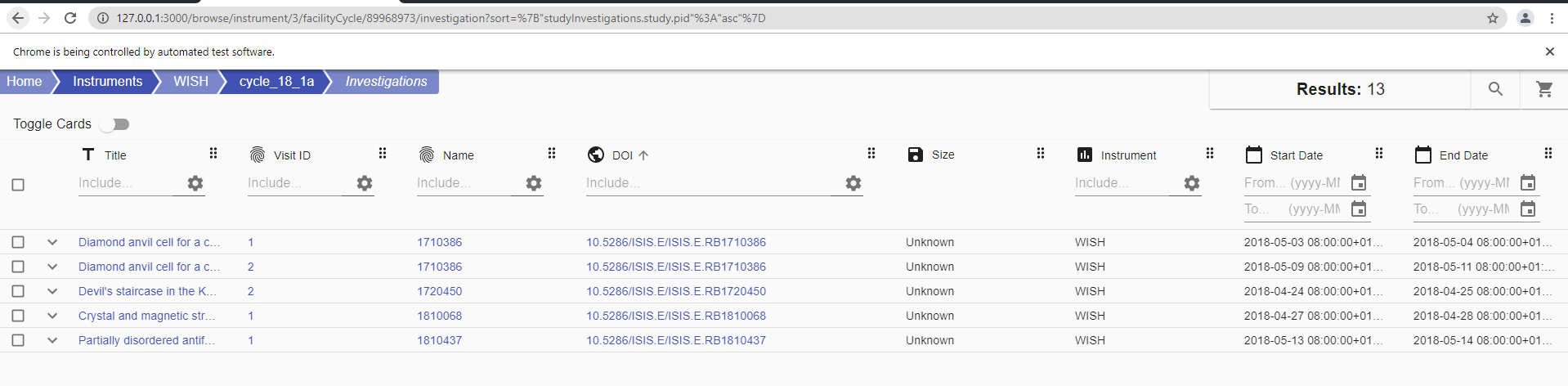
The changes you've made have the desired effect, sorting can now be done on one-to-many related fields. I do have a slight concern about how objects can be missing from the result (as you talk about in the original issue). I saw this happen when testing using some ISIS data on DataGateway. Here's a couple of screenshots to demonstrate what it looks like on the frontend:
Next week, I'll see if I can adjust the query in a way to prevent this behaviour and perhaps have the missing results at the end of the results (depending on direction of ordering). I highly doubt this will involve any further work for Python ICAT, but I'd like to investigate the reason behind the behaviour further before approving the changes for DataGateway. Thanks for doing this fairly promptly, it's much appreciated from all of us working on the DataGateway project. |
|
Regarding the side effects of the ordering on the search result in general and the missing objects in particular, I believe that is a feature (or bug, depending on the perspective) in |
|
I've investigated this using the use case shown in the screenshots. In summary, I found adding LEFT JOINs to the entities being joined for the field used for ordering (which has a one-to-many relationship) fixes the issue: SELECT DISTINCT(o) FROM Investigation o
JOIN o.facility AS f JOIN f.facilityCycles AS s1 JOIN f.instruments AS s2 JOIN o.investigationInstruments AS ii JOIN ii.instrument AS s3 LEFT JOIN o.studyInvestigations AS s4 LEFT JOIN s4.study AS s5
WHERE s1.endDate >= o.startDate AND s1.id = '89968973' AND s1.startDate <= o.startDate AND s2.id = '3' AND s3.id = '3'
ORDER BY s5.pid ASC, o.id ASC
INCLUDE o.investigationInstruments AS ii, ii.instrument, o.studyInvestigations AS s1, s1.study LIMIT 0, 50On our ISIS dev instance, that query will return 13 results, with the empty PIDs at the start/end of the list, depending on order direction. If you remove the 'LEFT', only 5 results will be returned (just like the screenshots demonstrate in my previous comment). I tested this on DataGateway by editing L407 of query.py to have LEFT JOIN in the string. I understand this might not be a feasible solution as this could bring unintended side effects to other queries, but I wonder if there's a way to have LEFT JOINs where a one-to-many relationship occurs for ordering? |
|
@MRichards99, I'm not sure if such in-depth JPQL tweaks are still within the scope of the Note that you can always pass a string to the The problem that I see by introducing different JOIN types is: how would you design the |
|
@MRichards99, after contemplating about this a little longer, I believe it is actually feasible. The idea would be to add another optional constructor argument E.g. the call to create the query you cite would be: >>> query = Query(client, "Investigation",
... conditions={
... "facility.facilityCycles.endDate": ">= o.startDate",
... "facility.facilityCycles.id": "= '89968973'",
... "facility.facilityCycles.startDate": "<= o.startDate",
... "facility.instruments.id": "= '3'",
... "investigationInstruments.instrument.id": "= '3'",
... },
... order=(("studyInvestigations.study.pid", "ASC"), ("id", "ASC")),
... aggregate="DISTINCT",
... includes=("investigationInstruments.instrument",
... "studyInvestigations.study"),
... limit=(0,50),
... join_specs={
... "studyInvestigations": "LEFT JOIN",
... "studyInvestigations.study": "LEFT JOIN",
... }
... )
>>> str(query)
"SELECT DISTINCT(o) FROM Investigation o JOIN o.facility AS f JOIN f.facilityCycles AS s1 JOIN f.instruments AS s2 JOIN o.investigationInstruments AS ii JOIN ii.instrument AS s3 LEFT JOIN o.studyInvestigations AS s4 LEFT JOIN s4.study AS s5 WHERE s1.endDate >= o.startDate AND s1.id = '89968973' AND s1.startDate <= o.startDate AND s2.id = '3' AND s3.id = '3' ORDER BY s5.pid ASC, o.id ASC INCLUDE o.investigationInstruments AS ii, ii.instrument, o.studyInvestigations AS s1, s1.study LIMIT 0, 50"What would you think of that? Now I have a technical quetion to any knowledgable person: what are the valid join specifications in JPQL? I believe there is only |
|
I merged this one and submitted a separated pull request #85 for the controlling the join specifications as these are in fact independent features. |


ORDER BYclause in classQuery. Still, emit a warning rather then an error because this may have surprising effects for the search results.QueryOneToManyOrderWarningfor that purpose and a new classQueryWarningas common base forQueryNullableOrderWarningandQueryOneToManyOrderWarning.Closes #83.